Making Mulled Wine Jelly

My poshest preserve (scrummy on scones)

I’m off to the the preserving showdown Jam Off in Wellington this weekend with a special jar of sparkling red jelly packed in my hand luggage. (Here’s the background story, from my Good Life column in NZ Gardener.)

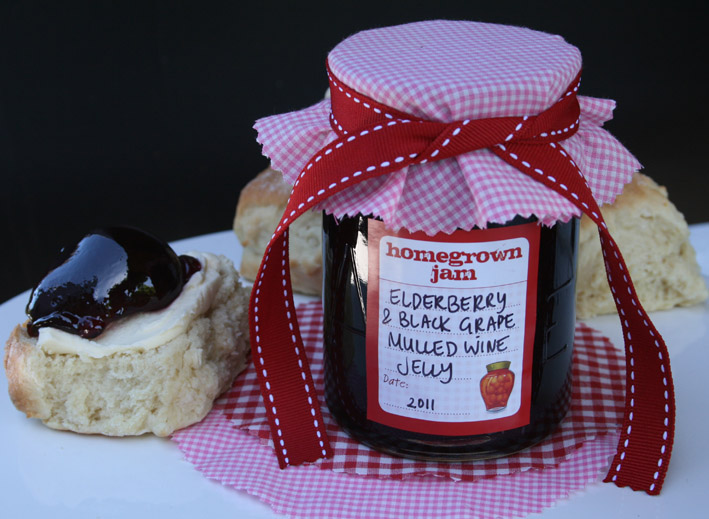
Figuring that the fancier a jam sounds, the more likely it is to appeal to the judges, I invented my own Elderberry, ‘Albany Surprise’ grape & Pinot Noir Mulled Wine Jelly. It’s my version of an uber posh preserve – and I have to say that it’s quite possibly the most delicious jelly I’ve ever made. Leaves quince jelly and crabapple jelly for dead, and not just because the colour is an intense ruby red.

The good thing about making jellies is that you really don’t need to stick to a recipe. Just bung any fruit you have – apples, crabapples, pears, feijoas, berries, guavas – into a pot, cover with water and simmer until the fruit is tender and pulpy. Then pour this pulp through a jelly bag or a double-folded piece of muslin (even a clean pillowcase will do the trick at a pinch) and let the juice drip out slowly into a bowl overnight. Resist the temptation to squeeze the pulp, as this can turn your jelly cloudy. The next day, measure the volume of liquid and bring it to boil in a pot. Then add an equal volume of sugar (ie, 2 cups of juice = 2 cups sugar). Stir constantly until the sugar dissolves, then boil rapidly until the liquid changes consistency and goes clear. (If you’ve never made jelly before, this is quite a noticeable change when it happens, and is usually accompanied by the sudden formation of scum on the surface, which is easily scooped off.) Test for setting point, then pour into jars and seal. And here’s my cheat’s tip: use Chelsea Jam Setting Sugar, which contains pectin and citric acid. It makes foolproof jelly in 5 minutes. Until I started using this special jam sugar, I could never get my red cherry guava jelly to set firmly (I just pretended I was making guava cordial or guava sauce).

To make my mulled wine jelly, I started with a few handfuls of dark purple elderberries off the scrubby old shrub in my city garden. I used them more for their colour than their flavour, which can be a tad overpowering. Elderberries are a roadside weed in most parts of the South Island, but if you want to grow a nice variety, Sarah Frater at The Edible Garden in Palmerston North has a beautiful lacy-leafed species called Sambucus laciniata. (It’s not listed in her mail order catalogue, but you can email her to request it. It has the same fruit as a standard elder but isn’t nearly as vigorous, which is a good thing! She also has the old-time variety ‘Adam’ in her Koanga Collection).

I placed the elderberries in a pot with 1kg ‘Albany Surprise’ grapes (the best variety for sweet, black, juicy grapes in late summer/early autumn) and lightly crushed them with a potato masher. Then I added 1 cup water, half a bottle of pinot noir wine, a cinnamon stick, half a dozen whole cloves and the zest of 1 orange (just peel it off in strips with a potato peeler, trying not to get any bitter pith). Add the orange juice too if you like. I also snuck in 2 star anise and a pinch of mixed spice (just because I had them in the pantry). Simmer over a low heat for an hour or so (don’t boil hard or the liquid evaporates and you’ll end up going through all this effort to make one miserable jar), then strain through a jelly bag overnight. Then measure the juice, add an equal quantity of sugar, and boil as per the instructions above.

(And if you’d rather just drink mulled wine, here is Jamie Oliver’s recipe.)
Red, red wine

Ravishing red rhubarb

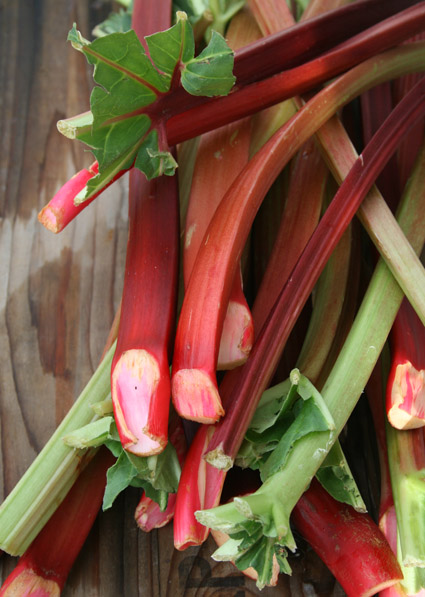
Someone should invent an air freshener that smells like rhubarb. Our house smells deliciously fruity tonight, as I’ve got big buckets of rhubarb steeping in boiling water on the kitchen floor. I’ve just started my first batch of rhubarb wine (hic!) and fizzy but alcohol-free rhubarb champagne. I bought four bunches of red-stemmed rhubarb from Stella Christoffersen of Running Brook Seeds at the Clevedon Farmers’ Market this morning, which I’ve supplemented with a couple of kilograms of my own fat greenish-red rhubarb. (The really red stuff is hard to come by unless you know a friend with an old clump, as most of the plants sold in garden centres these days, despite being labelled as ‘Victoria’, tend to ripen to pale red at best).

I’ve got a big bed of rhubarb by our front door that’s looking huge and healthy. (I wrote about why it’s looking so good in my Good Life column in NZ Gardener a couple of months back. All I’ll say is that my formerly miserable-looking patch of rhubarb had a sudden revival in fortunes following a stag do involving beer, boys and their bladders. Click here to read more.)

Shopping for spring

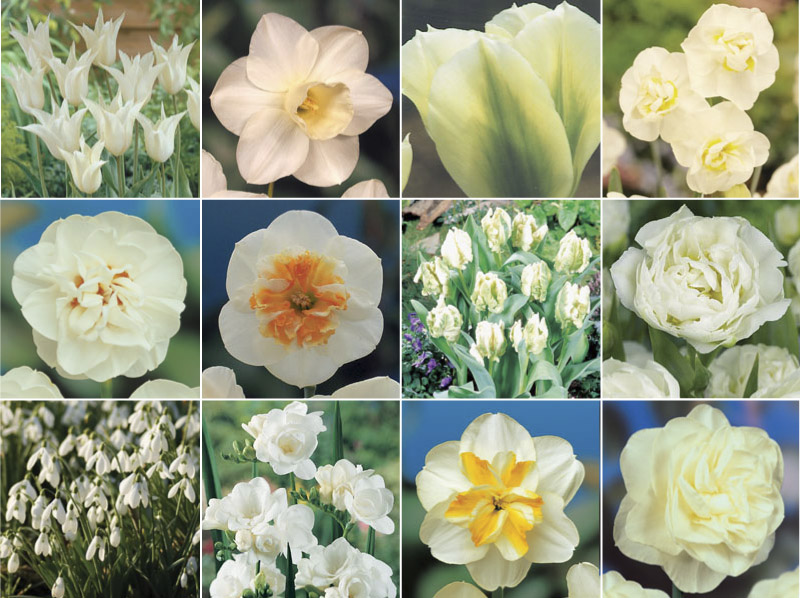
My orchard will look like this in spring! Photos: http://www.nzbulbs.co.nz

Our orchard is nothing much to look at yet. Two years ago, about two weeks after I met my husband, I suggested (some might say coerced with the power of fluttering, mascara-clad eyelashes) that he might like to put in an orchard of heritage apples, pears, almonds and crabapples in one of his paddocks. I’m glad I got in early, because orchards take years to stop looking like a bunch of lonely skinny sticks and start linking up their canopies in clouds of blossoms and fruit. You can’t let the sheep in to graze under the trees for a few years either (otherwise they’ll just eat the trees and ignore the long grass), so we’re mowing ours at the moment. But my aim eventually is only to mow long paths between the rows of trees, because I want to underplant them with hedgerows of wildflowers, rugosa roses, bulbs and berries, all mixed together in a sort of rustic, romantic, rambling fashion.

To get things started, I’ve taken elderberry cuttings from my city garden and we’ve strung up wires and waratahs to support boysenberries and raspberries (and possibly grape vines), plus I have plans to haul out all the cosmos and wildflowers from the wedding garden and use them as a seedy mulch around the trees. Plus there’s already quite a bit of red clover and ox-eye daisies growing wild in the paddock… which brings me to the bulbs.

Spring bulbs are simply gorgeous under deciduous fruit trees, so last night I succumbed to retail therapy and ordered a huge selection of white and cream daffodils, snowdrops, green-tinged tulips, bluebells, crocus and a few fancy frittillarias from NZ Bulbs‘ website. Now I’ve just got to rope in a team to plant them all. (When I visited Highgrove, Prince Charles’ private garden, a few years ago, he told us how he planted 7000 species tulips in his wildflower meadow. He gave sacks of bulbs to his team of gardeners and told them they couldn’t go home until they were all in the ground. I’m not sure that strategy will work on my husband and parents, but here’s hoping! I’ll treat them to apple tarte tatin if they agree.)

He’s got balls

Rambo, ready for action

We’re running a dating agency on our farm at the moment. “Ladies, meet Rambo. Rambo, meet our 12 eligible ewes. Now, go to it old fella. Make some lamb love.”

We’ve borrowed my mother-in-law’s ram to spice things up in the paddocks. Apparently Rambo spits out twins every time. He certainly seems to be blessed in the, well, balls department.

It will be intriguing to see what Rambo makes of Harold, the fat old ewe we inherited from my nephew Sam. (Harold was Sam’s first calf club day pet. I don’t think Sam fully comprehended the difference between girls and boys at that point.)

Harold is a rather unique sheep, and not just because of her manly name. She actually thinks she’s a cow, as she’s spent her entire life hanging out with heifers. When she moved out here with us, we initially put her in with the other ewes, but she didn’t seem to speak sheep. Instead she sat by herself, as far away as possible from the rest of the flock, and baa-ed miserably until we took pity on her and opened the gate to the cow paddock instead.

A romantic weekend with Rambo could be just what Harold needs.

Hop to it


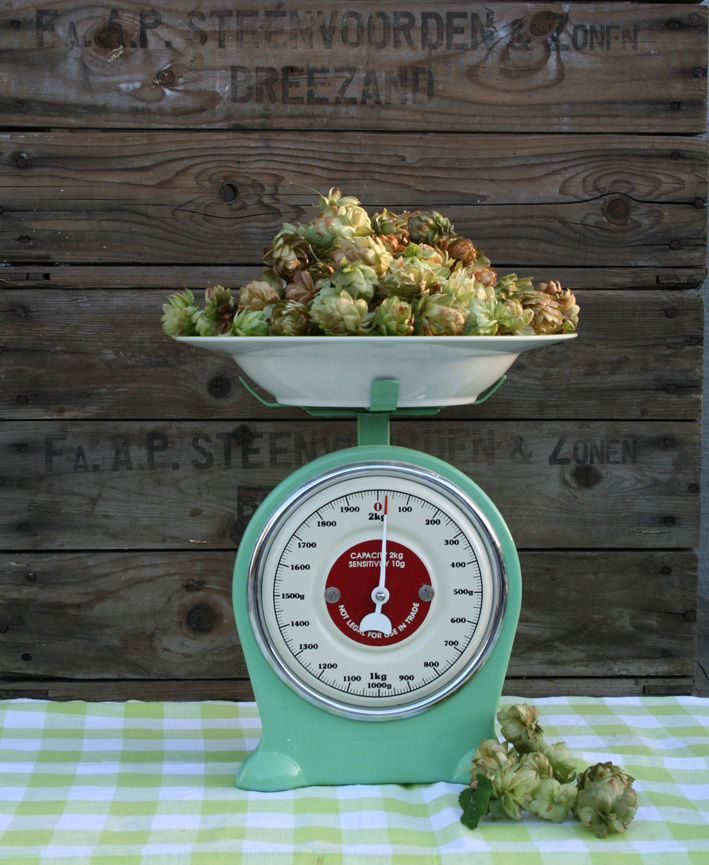
I harvested my hops this week. I’ve got three hop vines crawling over the stables, where they’re battling for supremacy with the grafted passionfruit vine, but only two have flowered (perhaps the other vine is a male?).  My entire harvest came to half a bucket, which weighed in at just 100g. (Hop flowers are as light as air!) But 100g is enough to make 10 litres of home-brewed beer, so I’ve been boiling them up in a big  pot of water to extract all their flavour. The smell is just incredible. And as hops are a natural sedative, I bet I’m going to sleep well tonight.

The apples of my eye

Pregnant women should be banned from cookbook stores. I can’t resist a home-cooked pudding at the moment, so when I came across the apple dumpling recipe in Monty and Sarah Don’s new book, The Home Cookbook ($59.99, published by Bloomsbury and distributed in New Zealand by Allen & Unwin), I immediately headed out to our orchard to grab a few ‘Granny Smiths’.

My Mum used to make apple dumplings, just as her Mum did. Encased in pastry and swimming in a simple caramel sauce, they’re one of our family’s all-time favourite autumn desserts. (Oddly, baked apples – you know the ones that come stuffed with raisins and sugar – are one of my all-time least-liked desserts.) 

I was all set to try Monty and Sarah’s recipe for apple dumplings until I read the ingredients: 500g plain flour, 250g unsalted butter, 125g caster sugar, 2 eggs, 1 tablespoon iced water and 4-6 apples. A quarter of a kilogram of butter?!

The Edmonds Cookery Book recipe only uses 50g of butter, so I figured it was safer to stick to that as my belly is already bulging at the seams! The Edmonds recipe doesn’t use eggs though, and as we’ve got plenty of those at the moment, I figured I’d drop one in for a little protein in my pudding.

To make apple dumplings, sift 2 1/2 cups flour, 1/2 teaspoon salt and 3 teaspoons baking powder together. Chop in 50g cold buttter and rub it into the dry ingredients until they have the consistency of breadcrumbs. Now break in a large egg (if desired) and add up to 1 cup milk (enough to bind the mixture into a soft dough). Divide the dough into four pieces and roll out into a large circle shape. Then peel and core a whole apple and place it in the centre of each dough circe. Drop a spoonful of brown sugar down the apple core hole, then fold in the pastry and press the seams together. (If you’re feeling creative, trim off a little excess pastry and cut out some leaves and a stalk to decorate the top. And don’t laugh at mine: they look like they’ve sprouted nipples!)

Grease a deep baking dish (it needs to be deep to accommodate the sauce) and pop the dumplings in. Then make the sauce by combining 1 cup boiling water, 1 cup brown sugar and a generous knob of butter. Pour this around the dumplings and bake at 190C (or 180C in a fan bake oven) until the pastry is puffy and golden (about 30-45 minutes). Baste the pastry with the sauce a couple of times during the cooking process. Then serve hot with as much custard or ice cream as you can squeeze into the pudding bowl beside each dumpling! Delicious!

Tea Towel Wisdom


Tea towels are the new bumper sticker – there are so many cute designs in homewares shops these days. But this is the current favourite in my kitchen. It was a wedding gift from Lisa & Heather at Mapua Country Trading. Makes me laugh every time I look at it… as I load the dishwasher…

Handsome quinces

Quince paste: just like the bought stuff!

It took an hour to peel, chop and core the quinces and another to simmer them until they were tender enough to puree, then eight hours in the slow cooker and about the same again in muffin tins in the oven at 100C… but in the end my quince paste turned out just like the bought stuff.

Would I make it again? Hell no! Now I understand why it costs so much for those tiny tubs at the delicatessen. My advice? Just make quince jam and spread it on your cheese and crackers instead of slicing it up on your cheeseboard. It tastes the same for about 10 per cent of the hassle.

(Although having said, I’ve just switched the slow cooker on again to have my first crack at making nier beurre, or black butter. Traditionally made from cider and cooking apples on the island of Jersey, this molassses-coloured preserve is cooked in a cauldron over an open fire for three days, all the while being stirred continuously. I read about it Country Living magazine last year and have been willing my apples to ripen ever since.)

Flower power

The simple charms of summer daisies

I took my secateurs for a walk today. My intention was to harvest the hop vines on the stables and chop back the triffid-like tendrils of the passionfruit vine to let a little light in to ripen the last fruit, but I got sidetracked picking flowers instead. Though our wedding garden is now a bit of a shambles (the lawn’s still in fine shape but the cosmos is falling over on itself, I haven’t dead-headed the dahlias since February 18 and sparrows have stripped every seed from the sunflowers, leaving only hollow husks in varying states of decay), there are plenty of flowers to pick.

I’ve still got single-flowered dahlias, white, pink and burgundy cosmos, Shirley poppies, zinnias, coneflowers and shasta daisies in pastel shades, as well as orange cosmos, coppery coreopsis and red gaillardias in the wildflower border. Most only last a few days in a vase (or jug; I’m a compulsive jug collector), which doesn’t matter a toss because there’s plenty more where they came from.

I’m going to go mad for flowers next spring and plant a proper “picking garden” on the terraced hill behind our house. It’s such an old-fashioned concept, a cut flower border, but I’m not sure why. After all, a vege patch is really just an edible picking garden.

My must-haves? Well, I’ve only just started planning but I know I definitely want:

1. Sedum ‘Autumn Joy’, for its rusty-red blooms at this time of the year.
2. Masses of Russell lupins. They’re a bit borderline in terms of the climate but I’ll give them a go anyway.
3. Honesty, for its papery seed pods.
4. Orlaya grandiflora ‘White Lace’. I just adore this plant; and was amazed that the delicate lacy flowers last for well over a week in the vase.
5. Love-in-a-mist. It’s probably hopeless for picking but it’s so pretty I don’t really mind.
6. White clary sage. I’d forgotten this gorgeous plant existed until I went to Southland in March and was given a glorious little tussie-mussie posy with it in it. Now I can’t wait to grow it again!
7. Fragrant sweet peas. I’m going to sow them along the farm fence and hope the cows don’t chew them.
8. Solomon’s seal. Another perennial I used to grow but haven’t in years. Mum was complaining to me tonight that her clump is getting out of control, so that’s easily fixed. I’ll take to it with a spade and steal all the extra bits for my garden.
9. Pink, purple and white echinacea.
10. ‘Shaggy’ astrantias.
Plus the new Parva Plants catalogue arrived on my desk this week. I’m afraid to open it. I fear for my credit card. So many gorgeous perennials… and so little time to get them in the ground before I can no longer see over my belly to plant anything!

Toffee (crab) Apples

I always add crabapples to my cider. They add a bit of extra bite to a blend of cooking apples, if you’re using them (like I do) because you can’t get your hands on true cider apples, like the marvellously named ‘Slack my Girdle’, ‘Broxwood Foxwhelp’ and ‘Tom Putt’.  (These varieties are available in New Zealand, though you’ll have to get your local garden centre to order them for you. )

I have three favourite crabapples. Purely for spring beauty, I adore Malus ioensis ‘Plena’. This ornamental variety doesn’t produce proper fruit – it blows everything in its arsenal on a marvellous display of bright pinky-red buds that open to pale pink spring blossoms.

But for fruit, I think ‘Jack Humm’ and ‘Jelly King’ are the perfect pair. ‘Jack Humm’ has masses of vibrant red fruit, so vibrant that they look like those small fake red apples sold as Christmas decorations. The fruit is slightly oval in shape, and just utterly, utterly beautiful in autumn.

‘Jelly King’ isn’t quite as spectacular but, as its name suggests, its blushing orange/red fruit make lovely crabapple jelly. It’s absolutely prolific and the birds tend to leave the fruit alone until quite late in autumn. But, more importantly, I like ‘Jelly King’ because it’s perfect for making teeny tiny toffee apples. I made a batch of them today in between stirring the quince paste and scooping feijoas into jars to preserve.

Toffee apples are never as nice as you think they’re going to be. Not just because you end up with sticky gloop all over your face, but because the toffee’s generally too sweet to eat in such a large dose, and the apple is invariably all soft and mushy underneath. Which is where the crabapple really comes into its own: crabapples are crisp,tart and utterly terrific-tasting with a coat of toffee.

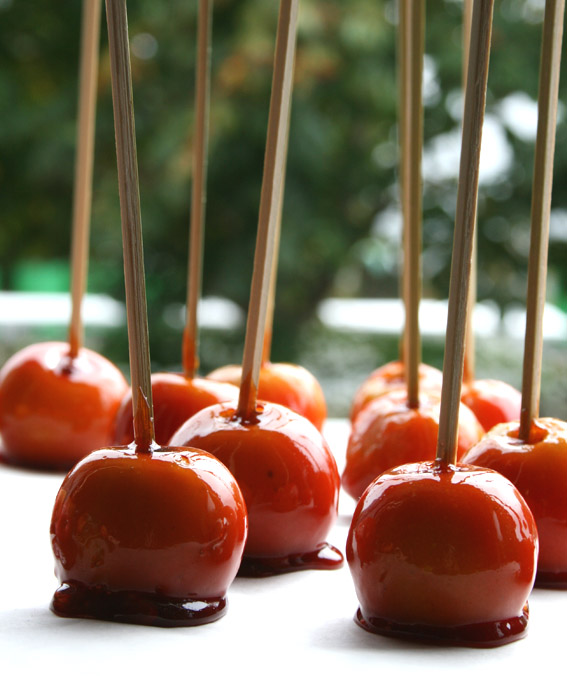
To make a dozen toffee crabapples, wipe the fruit, twist out the stalks and cut out the little hard bit on the base of each apple. (I’m sure there’s a technical horticultural term for this but blowed if I can think of it right now.) Then press a kebab stick into each apple.

To make the toffee, you need 1 cup sugar, 1 teaspoon vinegar (use cider vinegar if you have it, otherwise white vinegar), 1 teaspoon butter, a couple of drops of red food colouring and 3 tablespoons water. Place in a small pot and bring to the boil, stirring until the sugar has dissolved, then boil for 2-3 minutes, until a small dribble dropped into a cup of cold water turns hard and thread-like. Don’t take your eye off it as it turns from red clear toffee to burnt brown caramel in a matter of seconds. Take the pot off the heat, tilt it to one side and then dip the apples in, give them a slow spin to evenly coat in toffee, then place on a piece of baking paper on a tray. The toffee only takes a minute or two to set, which is about as long as it will also take you to chomp down the first one… and then a second…